

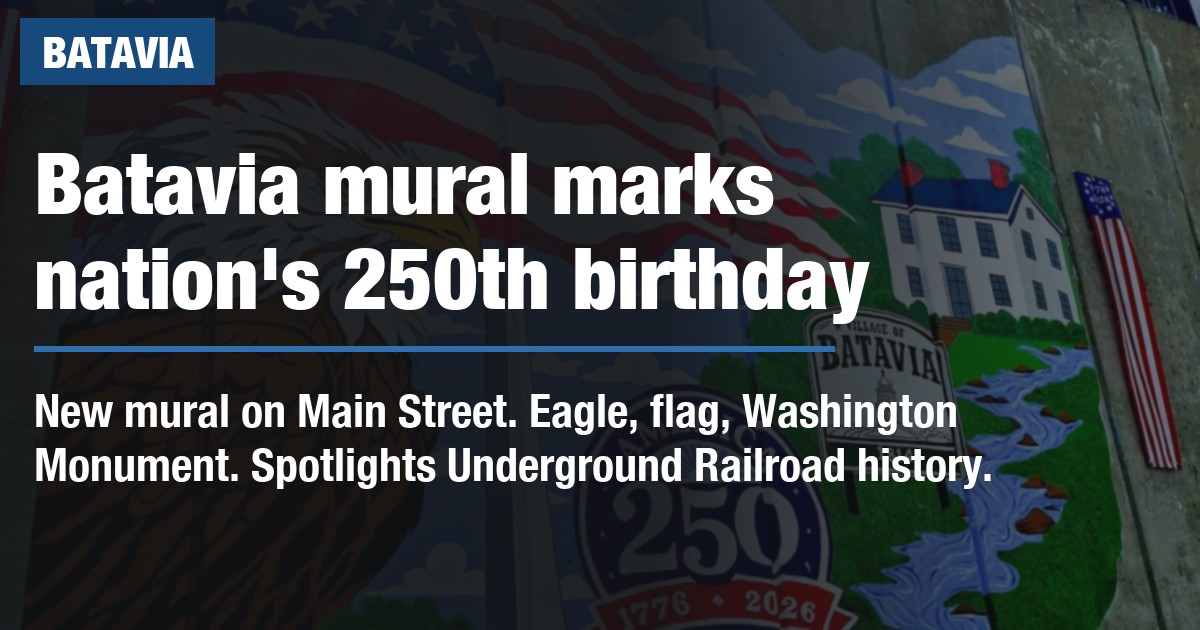
BATAVIA, Ohio — A new mural on Main Street is greeting drivers passing beneath the village’s railroad underpass with a splash of red, white and blue honoring America’s 250th birthday.
The mural covers a formerly blank concrete wall along the underpass and depicts a bald eagle, a waving American flag, the Washington Monument and the official “America 250 Ohio” seal marking the 1776-2026 semiquincentennial, according to a Facebook post from the Clermont County Historical Society. A green-and-blue outline of the state of Ohio anchors the design, along with a “Village of Batavia 1814” sign and a painting of a two-story white house. The artwork is signed by artist Eryn Kipner.
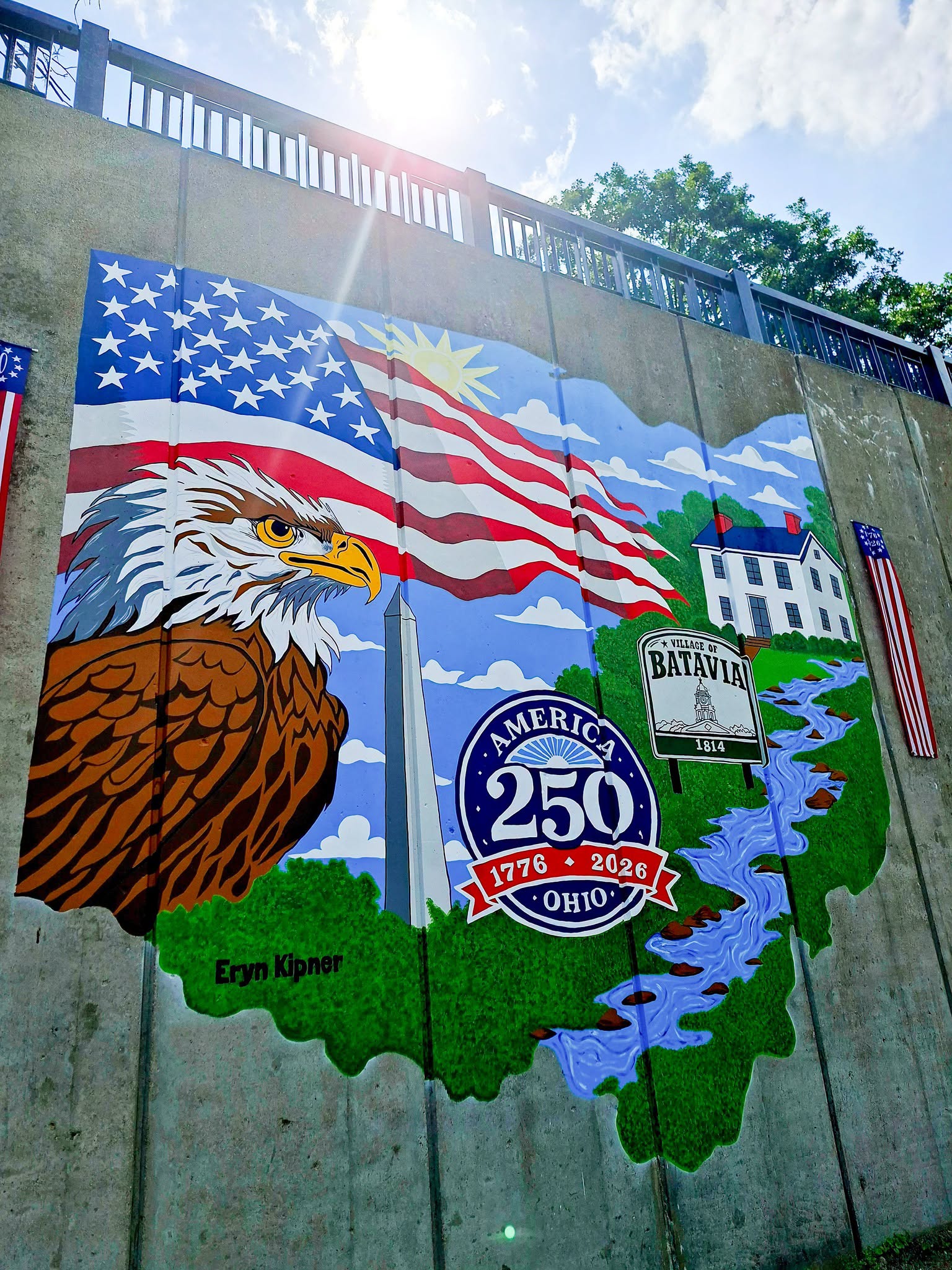
That white house, the historical society said, is the Brice Blair Home Site at 123 N. Third St., one of two Batavia locations officially recognized on Clermont County’s Freedom Trail, a self-guided tour of homes, churches and other sites tied to the Underground Railroad. Blair is not documented to have hidden freedom seekers himself, but he served as an elder at the antislavery Batavia Presbyterian Church and as president of the Clermont County Anti-Slavery Society.
Batavia Presbyterian Church, organized in December 1829, adopted resolutions in 1839 barring slaveholders from occupying its pulpit and requiring scrutiny of any member transferring from a slaveholding congregation, according to the Presbytery of Cincinnati. The Rev. George Beecher pastored the church, and his sister, Harriet Beecher Stowe — who later wrote “Uncle Tom’s Cabin” — was a frequent guest at the Blair home when her brother was in town, according to Clermont County’s Freedom Trail materials. The Freedom Trail includes 42 sites across the county, 22 of them listed on the National Underground Railroad Network to Freedom.
The Batavia mural joins a wave of public art that has gone up around Clermont County this year as part of the region’s America 250 commemoration, including murals in New Richmond, Williamsburg, Goshen, Loveland, Milford, Owensville, Bethel and Union Township. Jeff Blom, president of Clermont County’s convention and visitors bureau, has said the murals are designed to last two decades or more.
The information contained in this story was obtained from the Clermont County Historical Society.