

LOVELAND, Ohio — The city is offering five residents $180 toward a new native tree if they remove a mature Callery pear tree from their property, part of a new program aimed at clearing out one of Ohio’s most aggressive invasive species.
The Green Bounty Program: Pear Removal Reward begins Monday, Oct. 12, and runs through Dec. 31, 2026, or until the five available rewards are claimed, according to the city’s Tree & Environment Committee. Residents who cut down a mature Callery pear — including the common Bradford and Cleveland Select cultivars — can submit before-and-after photos to Shawn Hartness, a member of the committee, at [email protected] and receive $180 toward the purchase of a replacement native tree.
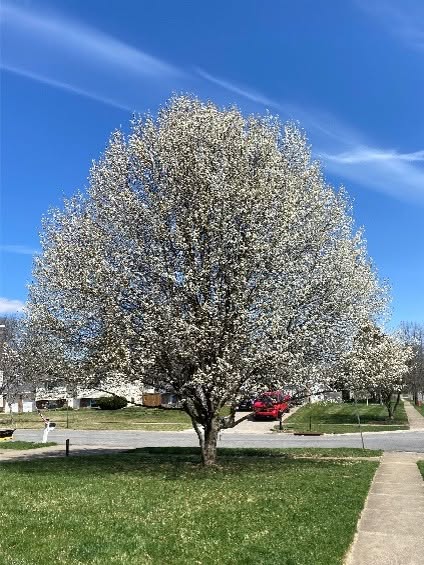
Residents unsure whether their tree qualifies can photograph it and use the nature-identification app iNaturalist, or contact Hartness directly for an in-person look, the committee said.
Callery pears were imported from Asia in the early 20th century as an ornamental, fast-growing street tree prized for its white spring blooms. But the trees spread rapidly once birds carry their seeds into fields and forest edges, where they crowd out native species, reduce wildlife habitat and offer little food value in return. Their branch structure is also notoriously weak, leaving them prone to splitting apart in storms.
The Ohio Department of Natural Resources listed Callery pear as an invasive species in 2018 and gave nurseries a five-year phase-out period; the sale, growth and planting of the tree became illegal statewide on Jan. 7, 2023, making Ohio the first state in the country to ban it. The law did not require owners to remove pear trees already on their property, though the state’s forestry division has encouraged removal to help native trees and shrubs recover.
Loveland’s Tree & Environment Committee advises city council on environmental policy and has run similar efforts before, including organizing volunteer workdays targeting invasive plants at city parks. The city has been recognized as a Tree City USA by the Arbor Day Foundation every year since 1989, a designation that requires a tree board, a tree-care ordinance, a minimum annual forestry budget and a formal Arbor Day observance.
The information contained in this story was obtained from the City of Loveland.